What is engineered lumber?
Engineered lumber has changed the way we build and what can be built.
A simple definition is anything made with wood that has been modified beyond simply removing other wood to make a board. It is everything that is not dimensional lumber, which is the standard building material you see lining the racks of big box stores.
Here is a list of some of the more common and known engineered lumber.
Pressure-treated lumber
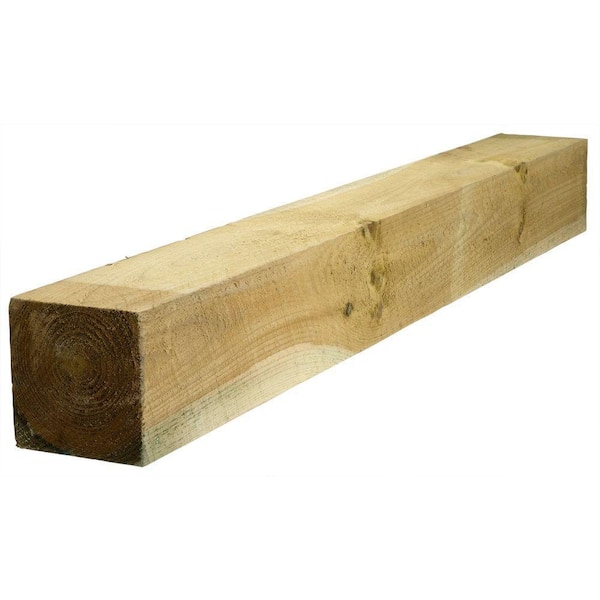
This dimensional lumber has been treated with chemicals to make it more resistant to mold and fungi that would cause it to rot with water and ground contact. East of the Mississippi River, there is pressure-treated lumber that is green in color. It comes in ground contact and non-ground contact options. High pressure, like vacuum sealing, is used to drive/pull chemicals into the wood to give it the desired qualities. This is a treatment against mold and fungus, not insects.
Sheet goods
Sheet goods are all the wood products that come in sheets, with a standard size of 4ft x 8ft. This is not a natural form wood takes but it does make building things far easier. These are things like plywood, oriented strand board (OSB), and press board. While these are used to build houses and add sheer value (rigidity, locking things together) they are not part of our structural framing.
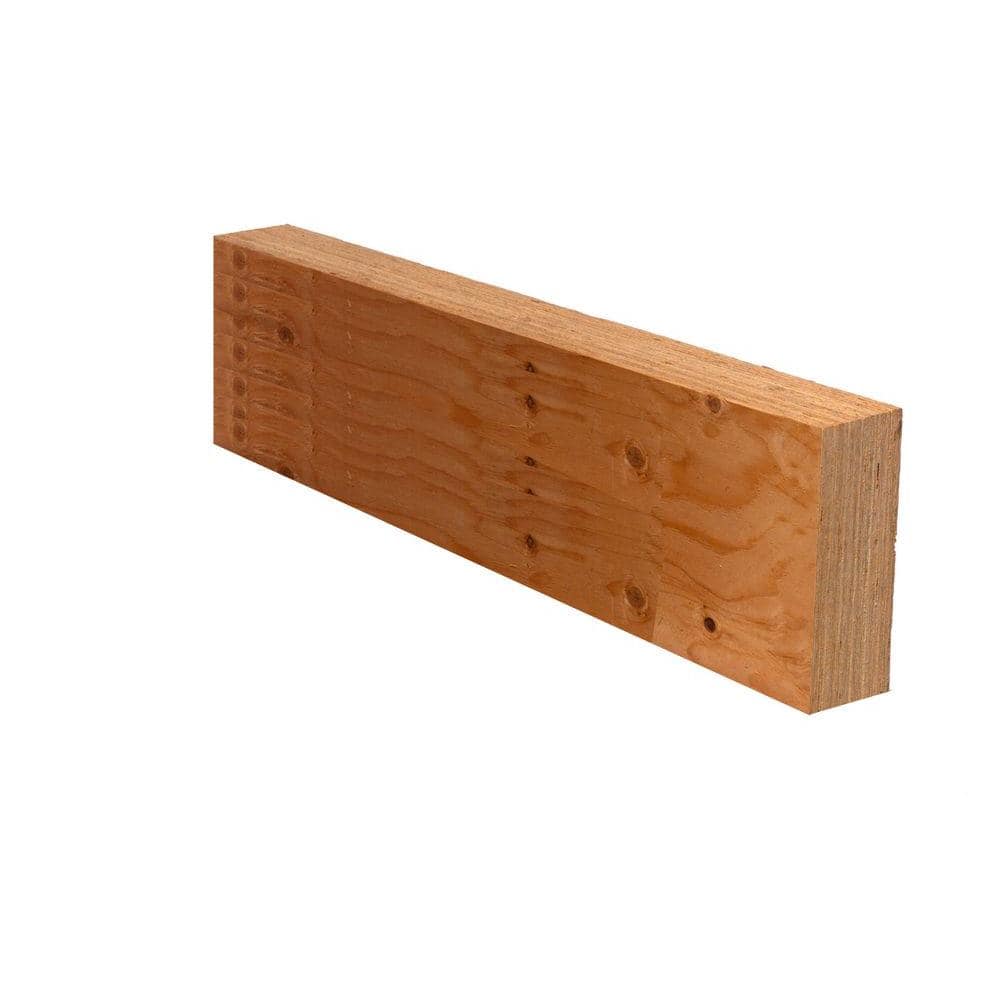
LVL (Laminated Veneer Lumber)
This product is made by laminating long strips of wood (veneer) in differing orientations to produce boards. They are two or more times stronger than a dimensional board of the same size. They also resist compression better than dimensional lumber due to the differing orientation of the wood fibers. These boards are great for creating big openings and adding lots of strength to and area with out having to use steel.
PSL (Parallel Strand Lumber)

These are made by gluing strands of lumber together under pressure that are parallel to each other. They have great compressive strength making them excellent for use as a column or post where lots of weight needs to land in one spot. They can also be built up into large dimensions and made into beams to support a large load. PSLs typically cost more than LVLs, making them better for applications where they are needed for their ability to be pressure treated, or improved appearance when staining.
LSL (Laminated Strand Lumber)
Compared to dimensional lumber, LSL have increased strength, stiffness and dimensional stability, but are not as strong as an LVL or PSL. They cost less than LVLs and PSLs and more then dimensional lumber. They are useful for framing a tall wall that will get raking light, or a shower where tile will be installed.
Gluelam
These beams are made of dimensional lumber glued together. The provide increased strength and stiffness are are typically used to make big openings or to create uniquely shaped beams.
I-joist

This is the wooden version of the commonly recognized steel framing member. They provide increase stiffness and ability to span further distances than dimensional lumber would. They are designed to allow larger openings in them as well for mechanicals (duct work, plumbing and electrical wires) than can be accomplished with dimensional lumber.
Web Truss
This is another floor and ceiling framing product that also mimics its steel counter part. There is typically a 2×4 laying flat running horizontally along the top and bottom. Done with either metal (less common now) or wood webbed members making triangles between the top and bottom pieces. These trusses allow for longer unsupported spans and provide lots of openings for mechanicals.